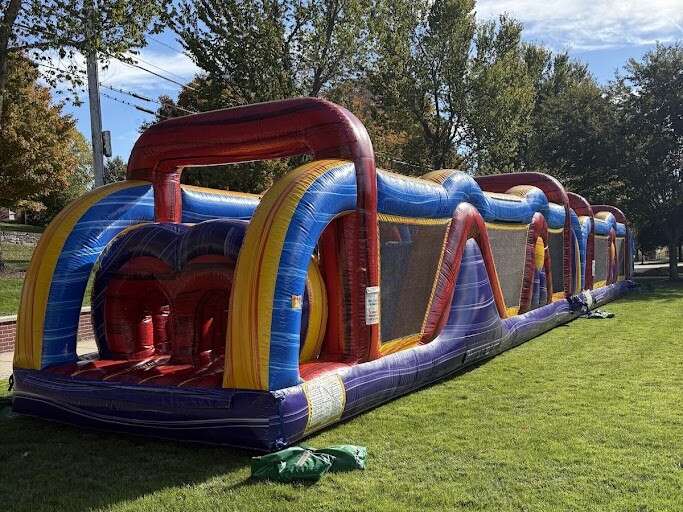
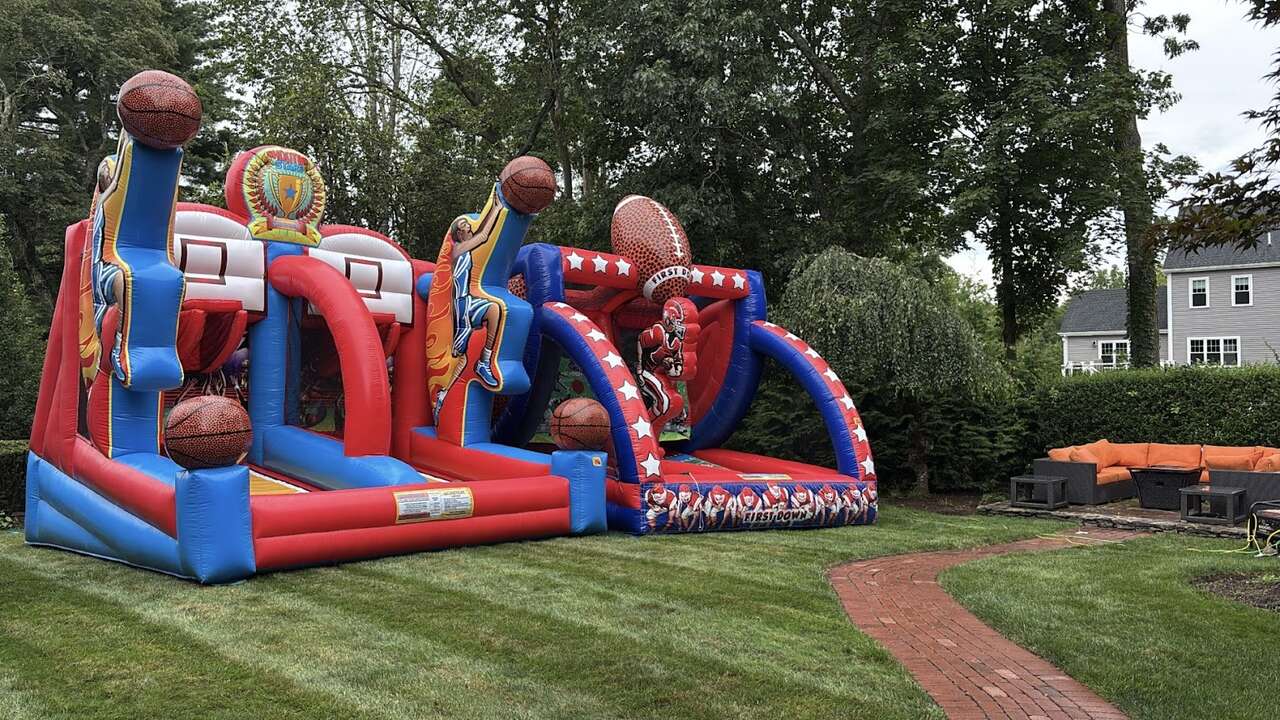
A simple three-part framework, budget, weather, and safety, keeps your party from drifting as new ideas appear: how much you can spend, what you will do if the forecast changes, and who is watching each part of the party.
Step 1 – Set a clear budget
Decide on a total number you are comfortable with, then roughly split it between the main activity, food and drink, and everything else. Prioritizing the main experience, such as a bounce house, obstacle course, or well-planned activity stations, usually creates more joy for the money you spend than heavy decorations or elaborate favors.
Step 2 – Decide your weather plan
Weather is unpredictable, so treat your outdoor plan and backup plan as equals, not as “real” and “second choice.” Decide in advance what conditions will pause inflatables or move activities indoors, and agree who will make that call. Follow your rental provider’s weather guidance, and pause inflatable use when wind, lightning, heavy rain, or other unsafe conditions are present. Your backup can be simple: indoor games, crafts, music, scavenger hunts, or a movie.
You do not need complicated replacements. Indoor obstacle courses made from cushions, taped floor lines, chairs, and tunnels are exciting for younger children. Dance games, scavenger hunts, and simple “Minute to Win It” challenges work well in living rooms, halls, or church spaces. If you keep a small box of supplies ready—balloons, tape, paper, stickers, plastic cups- you can improvise new games quickly without buying extra kits at the last minute.
For every plan, think about supervision. Decide which adult watches the inflatable, who runs group games, who stays near the food, and who is free to answer the door, guide late arrivals, or take photos. Clear roles reduce the quiet panic you feel when everyone looks to you at once.
Step 3 – Write down basic safety roles.
For home parties, that might include who is watching the inflatable or active games, where children may and may not go, how you will handle food allergies, and what time you will start winding things down. For school or community events, add first-aid points, restroom access, and clear meeting spots.
You do not need a thick folder for this. One sheet with your budget split, weather triggers, and safety roles is enough. Keep it with your guest list and any notes you send to helpers or a rental company. When fresh ideas pop up, a second inflatable, another game, more decor—you can glance at that page and see quickly whether they fit the plan you made when you were rested and thinking clearly.
Easy Birthday Party Food, Drink, and Favor Ideas
Food does not need to be complicated to feel special. For most kids’ birthday parties, simple grab-and-go options work better than a full meal because children are usually moving between games, inflatables, crafts, and cake.
Good birthday party food ideas include:
- Pizza or sandwiches for an easy main option.
- Fruit cups, pretzels, crackers, or veggie trays for simple snacks.
- Popcorn, cotton candy, or snow cones for a carnival-style treat.
- Cupcakes or sheet cake for easier serving.
- Water bottles or drink stations should be placed near the play area.
- Allergy-labeled snacks so parents can check ingredients quickly.
Keep the cake table away from the main play zone so kids are not running near candles, drinks, or dessert trays. If you are using a tent, place food and drinks in the shade where adults can refill supplies and watch the party at the same time.
Party favors can stay simple, too.
Instead of buying lots of small plastic toys, choose one useful favor that fits the theme: bubbles for a toddler party, glow sticks for a glow party, stickers for a dinosaur party, or sidewalk chalk for a backyard field day.
For school, church, or community events, skip individual favors and put the budget toward shared activities, concessions, or a better seating area.
Which Activities Fit Your Guest Count and Space?
Choose activities based on the number of kids, their ages, and how much usable space you have.
- Six to ten children – one medium bounce house or combo plus a craft or building table.
- Ten to twenty children – a hero inflatable, two lawn games, and one calmer station, such as drawing.
- Tweens and younger teens – an obstacle course or slide, a sports station, and a tented snack or photo area.
- Mixed ages at a community event – one toddler area, one big-kid area, and a few all-ages stations like bubbles or chalk.
Use simple rotation rules to keep the party moving: set short turn limits, mark clear entry and exit points, and offer a waiting activity like chalk, bubbles, or a quick game nearby.
How to Set Up Your Backyard for Inflatables, Seating, and Food
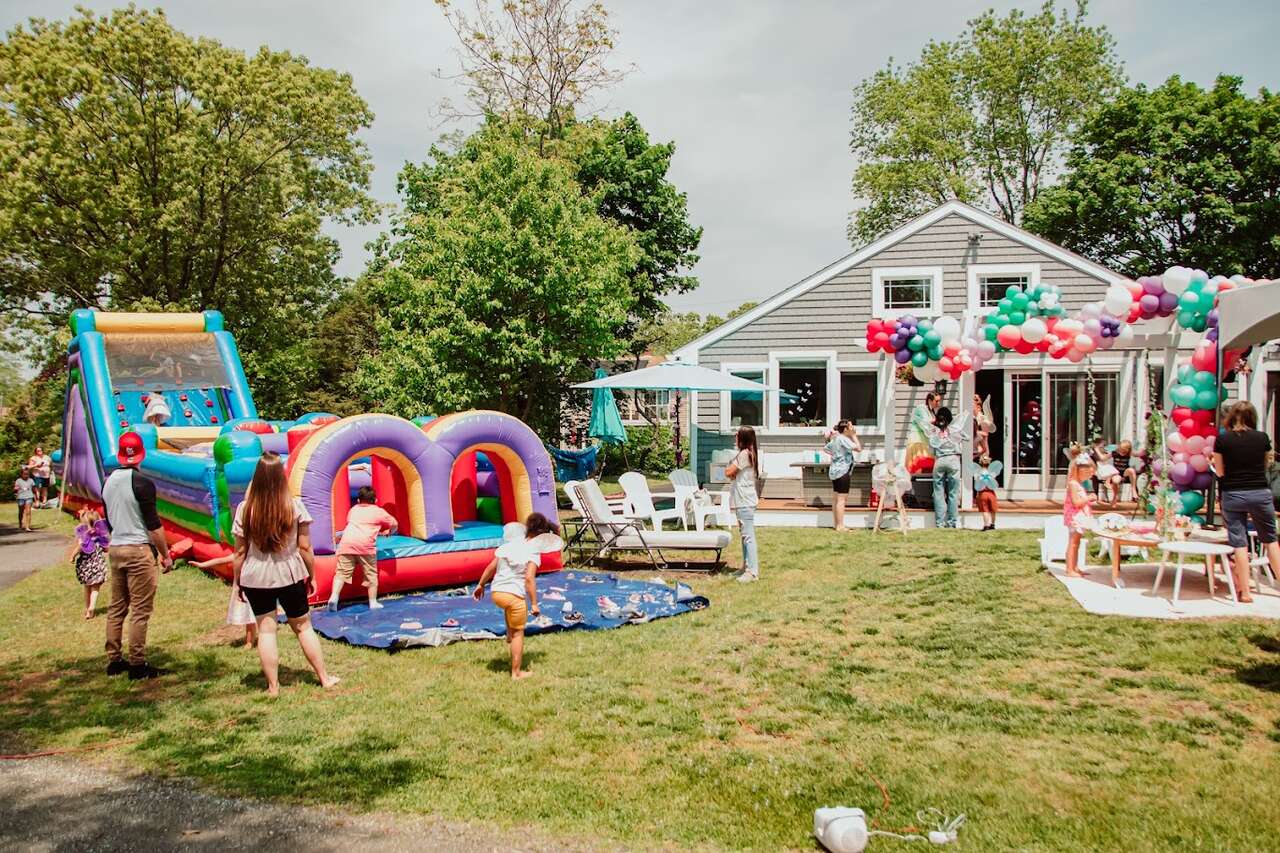
A safe, calm backyard setup starts with a simple map that keeps inflatables, seating, and food from crowding the same space.
Plan flat ground for inflatables, clear sightlines for supervising adults, and obvious paths between zones before delivery day. When power, access, and activity zones are mapped out ahead of time, the setup crew can place everything more efficiently so you can focus on hosting instead of improvising.
It often helps to divide the yard into three zones:
- Play zone – inflatables, slides, obstacle courses, and active games.
- Food zone – tables, coolers, cake, and any food machines.
- Seating zone – chairs for adults with clear views of the play area.
Keeping the play zone away from house doors, grills, and cake tables reduces the chance of children running through crowded spots while carrying food or drinks.
Step 1 – Sketch the space
Start by sketching your space with fences, trees, slopes, doors, and gates marked in. Inflatables belong on flat, open ground, ideally grass, with room on all sides so children are not bouncing into fences or branches. Keep clear sightlines from where adults will sit so one person can watch several areas at once without getting up constantly.
Step 2 – Plan power and access
Next, plan power before anything arrives. Inflatables need dedicated electrical outlets and outdoor-rated cords. Keep blowers as close to outlets as possible, and run cords along fences or behind seating instead of across walkways. If you need a generator, place it away from play and food, but where adults can still reach it easily.
Step 3 – Place zones and pathways
For school fairs, church festivals, or town events, your map also needs to handle lines. Plan where children will wait in line for inflatables, where they will take off shoes, and how strollers or wheelchairs will pass through. Wide paths and simple signs help a lot when you have mixed ages and mobility levels.
Step 4 - Keep an Eye on the Weather and Plan Ahead
Weather belongs in your layout, too. If the forecast is hot, plan real shade over seating and waiting areas, not just the inflatable itself. Place water jugs where children coming off the slide will see them. Decide in advance what wind or lightning conditions mean “no inflatables today,” so you are not making that call in front of disappointed guests.
With a simple map, you and your rental provider can look at the same picture and adjust together.
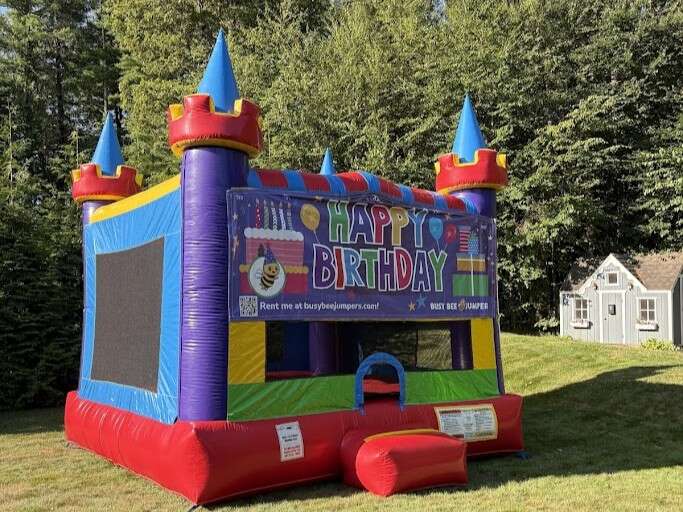
Busy Bee Jumpers can help you think through unit size, tent placement, access points, power needs, and delivery routes based on your yard, guest count, and event type.
Before you book, measure the usable setup area, note the surface type, and take a few photos of the yard or event space.
That gives the Busy Bee Jumpers team better information when helping you choose a bounce house, slide, obstacle course, tent, or party package.
Ready to Plan a Birthday Party Without Guesswork?
If you are looking at your backyard, your calendar, and your child's wish list and wondering what really fits, you do not have to figure it out alone. Guests often remember experiences more than the party theme itself, which is why the right setup matters more than perfect decorations, and personalized decorations that reflect the birthday person's interests can enhance any theme without adding stress to the planning process. A good birthday party should feel fun, safe, and manageable without turning planning into a second job.
Busy Bee Jumpers helps families, schools, churches, and community groups across the country choose inflatables, tents, tables, chairs, and fun food rentals that fit the event space, guest count, age range, and budget. Whether you are planning a backyard bounce house party, a water slide party, a karaoke party with a mic and a playlist, a school field day, a church picnic, or a larger community event, the right rental setup can make your next celebration to run and give guests the kind of memorable experience they will talk about long after the cake is gone.
Before you book, gather a few basics: your event date, town, guest count, age range, yard or venue measurements, surface type, and any photos of the setup area. With that information, the Busy Bee Jumpers team can help you narrow down the best bounce house, combo unit, slide, obstacle course, tent, seating, or concession option for your next birthday party. Personalized decorations reflecting the birthday person's interests can be built around whatever rental setup you choose, making the overall experience feel cohesive and intentional without requiring a major design effort.
Start by checking availability for your date, then choose the rentals that match your space and your child's favorite birthday party ideas.