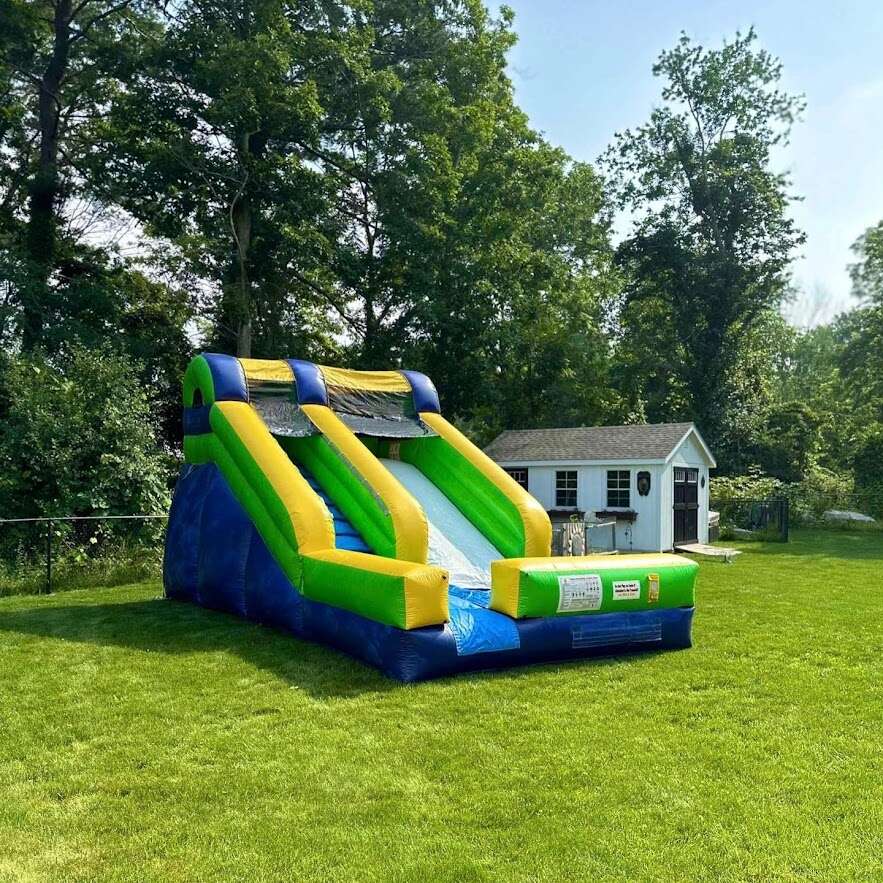
Few attractions create as much excitement at a birthday party, school carnival, church festival, or community event as an inflatable bounce house. Kids immediately line up to jump, laugh, and burn off energy while parents enjoy watching them have fun. But before the first child starts bouncing, it's important to think about bounce house safety.
Questions naturally come up before any event:
- Is the yard level enough?
- How many children should be inside at one time?
- What happens if the weather changes?
- Do adults need to supervise the inflatable the entire time?
- Is a professional setup really necessary?
The good news is that you don't need to become a safety expert to host a safe event. Following a few proven bounce house safety guidelines dramatically reduces risks and helps everyone enjoy the day with confidence.
Whether you're renting an inflatable bounce house for a backyard birthday, school field day, church picnic, fundraiser, or corporate event, safety starts long before the children begin jumping. Choosing the right size inflatable, setting it up correctly, following manufacturer guidelines, enforcing occupancy limits, and providing continuous adult supervision all work together to create a safer experience.
This guide explains everything parents and event organizers should know about bounce house safety, including proper setup, supervision, weather considerations, safety rules, cleaning, maintenance, and choosing the best inflatable for your event.
Why Does Bounce House Safety Matter?
It's easy to think of a bounce house as simply another party attraction, but inflatable jumpers are active play equipment designed to be used according to specific safety standards.
Research published in the Journal of Pediatric Surgery using U.S. Consumer Product Safety Commission data found that fractures and muscle strains were among the more commonly reported injuries associated with bounce houses. That’s another reason why simple habits like active supervision, appropriate group sizes, and following the inflatable’s operating guidelines matter so much during an event.
Most bounce house injuries, though, don’t come from freak accidents. They come from everyday habits you can actually change:
- Too many children bouncing at once
- Mixing toddlers with much older or larger children
- Rough play, flips, wrestling, or climbing on walls
- Lack of adult supervision
- Poor anchoring or improper setup
- Continuing to use the inflatable during unsafe weather conditions
A bad fall can mean missed school, medical bills, and a child who suddenly feels nervous about active play.
Fortunately, these are all situations that can usually be avoided with proper planning.
A well-managed inflatable creates an environment where children can stay active while parents enjoy peace of mind. Whether you're hosting ten children or several hundred guests, having a simple safety plan protects everyone involved, including your family, guests, volunteers, and event organizers.
For schools, churches, municipalities, and businesses, following established bounce house safety protocols also helps reduce liability concerns while creating a better experience for attendees.
The foundation of bounce house safety comes down to four key principles:
- Choose the right inflatable for your guests' ages and sizes.
- Follow all manufacturer guidelines and rental company instructions.
- Ensure proper setup, anchoring, and power connections.
- Assign one responsible adult to actively supervise the inflatable at all times.
When these four fundamentals are consistently followed, bounce house safety becomes part of normal event planning instead of something to worry about throughout the day.
Tips for Keeping Kids Safe While They Play
Children naturally become excited around inflatables, which makes clear rules and basic safety measures especially important. Most problems start when no one is clearly in charge, capacity limits turn into guesses, and kids quietly rewrite the rules as the day goes on.
In practice, your goal is simple: turn the safety label and rental sheet into kid-friendly rules, then back those rules up with one focused adult. That combination does more for injury prevention than any speech you could give.
The simplest rules are often the most effective because they're easy for both children and adults to remember.
Keep Similar-Size Children Together
One of the leading causes of bounce house related injuries occurs when significantly larger children bounce alongside toddlers or younger kids.
Older children naturally jump higher, move faster, and generate more force. Even without intending to, they can knock over smaller children who have little chance to react.
Whenever possible:
- Schedule separate sessions for toddlers.
- Group children by similar age and size.
- Rotate groups rather than allowing everyone inside together.
This simple adjustment greatly reduces collisions and helps every child enjoy the inflatable safely.
Follow the Inflatable’s Occupancy and Weight Limits
Every commercial inflatable has recommended occupancy limits and weight limits established by the manufacturer.
These limits are based on engineering, testing, and safe operating conditions for these inflatable play structures, not convenience.
Avoid allowing "just one more child" inside once capacity has been reached.
Overloading an inflatable can:
- Reduce stability
- Increase collisions
- Place additional stress on seams and anchor points
- Make supervision more difficult
If children are waiting, simply rotate groups every few minutes instead of exceeding capacity.
Remove Shoes, Jewelry, and Sharp Objects
Before entering the bounce house, children should remove anything that could damage the inflatable or injure another child.
This includes:
- Shoes
- Glasses, when practical
- Jewelry
- Watches
- Belt buckles
- Pens
- Toys
- Keys
- Cell phones
- Anything with sharp edges
Shoes can damage commercial-grade vinyl, while jewelry or sharp objects may scratch children or puncture inflatable surfaces.
Food, drinks, gum, and candy should also stay outside the inflatable to reduce choking hazards and keep the bounce house clean. These simple injury prevention tips are easy to review with children before play begins.
Keep Play Under Control
Bounce houses are designed for bouncing, not gymnastics. Children should never attempt:
- Front flips
- Backflips
- Somersaults
- Wrestling
- Tackling
- Climbing walls
- Hanging on netting
- Pushing other children
Simple bouncing and age-appropriate games are much safer than competitive roughhousing and can help reduce the risk of a serious injury.
If play starts becoming too energetic, the supervising adult should pause the activity and calmly remind the children of the rules before restarting.
Keep an Adult Focused on Supervision
One of the biggest misconceptions is that adults only need to check on children occasionally.
In reality, active adult supervision is one of the most important parts of bounce house safety.
A designated supervisor should provide constant adult supervision and remain near the entrance throughout the operation.
Their responsibilities include:
- Counting children entering and exiting
- Enforcing occupancy limits
- Keeping age groups separated
- Watching for rough play
- Monitoring weather conditions
- Watching for signs of overheating or heat illness during hot-weather events
- Ensuring children remove shoes and jewelry
- Keeping the entrance clear
- Knowing how to safely shut down the blower if necessary
For larger events, schools, festivals, and church functions, it's a good idea to rotate trained staff members or volunteers every 30–60 minutes so supervision remains consistent.
A distracted supervisor who is also serving food, greeting guests, or running another activity cannot effectively monitor the inflatable.
For a more detailed breakdown of the rules children and parents should follow during use, see our bounce house rules guide.