Planning a party or school event shouldn’t feel like cramming for a test. Yet the moment you start comparing obstacle-course bounce houses, it can feel that way: you need the kids happy, everyone safe, the unit to fit your yard or field, and the price to stay in line. Photos blur together, sizes are hard to read, and it’s easy to worry you’ll end up with long lines, bored older kids, or something that simply doesn’t fit.
You don’t need to learn the rental business. You just need a simple way to look at fit, crowd flow, safety, and cost.
If you’re comparing an obstacle course bounce house rental, this guide walks you through sizing an inflatable obstacle course to your ages and space, when it truly beats a regular bounce house, the safety features you can’t skip, which features earn their price, and where to save without cutting fun or peace of mind.
How to Choose the Right Size Obstacle Course for Your Guest Count and Yard
Choosing the right inflatable obstacle course rentals can feel overwhelming because factors like size, age fit, crowd flow, and safety setup all matter at once. The easiest way to narrow your choices is to start with the type of obstacle course you want, then match it to your guests, event, and available space.
Match the Course to Guest Count and Age
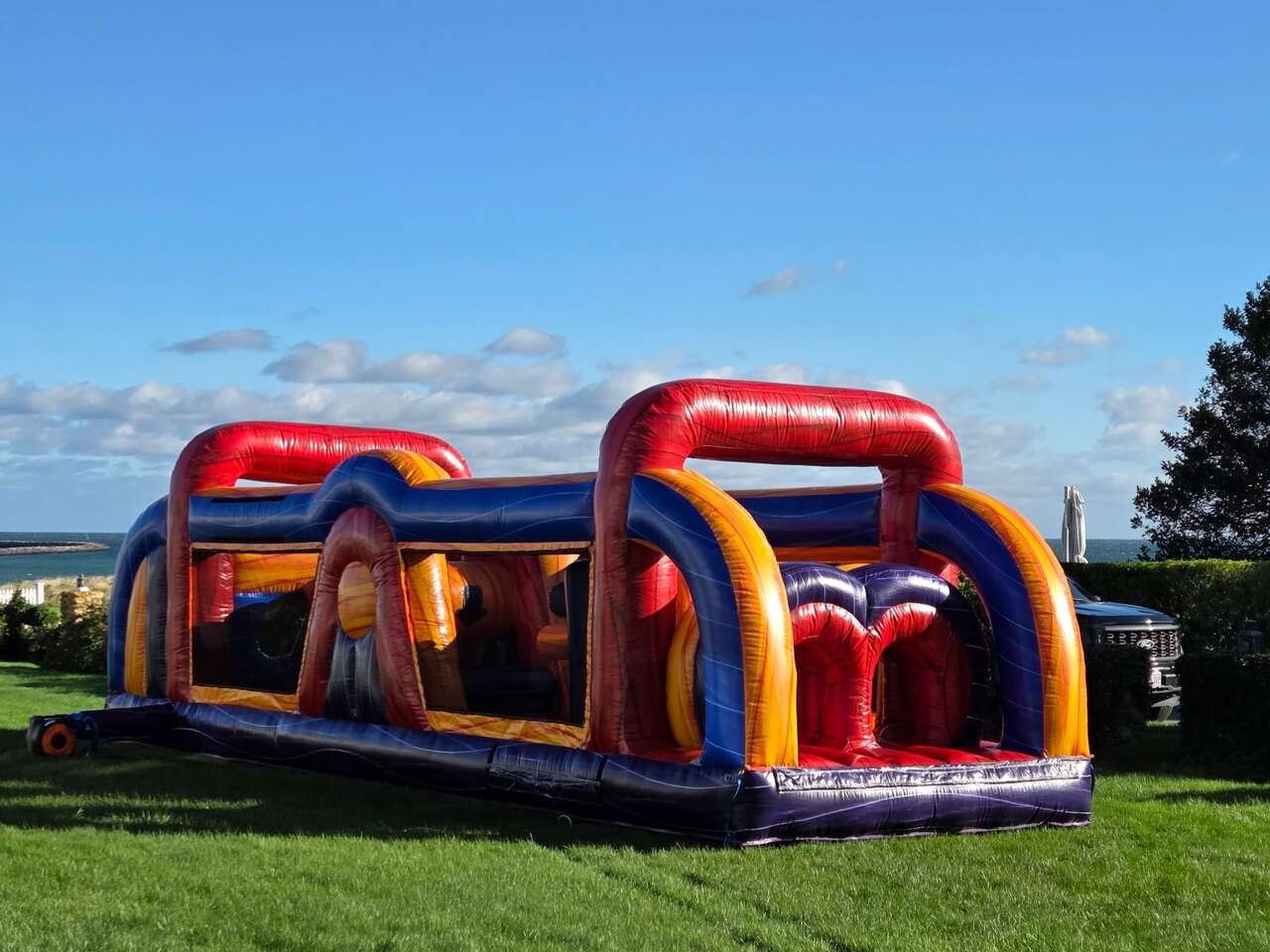
Obstacle courses come in various lengths and layouts, perfect for different event types like school carnivals or corporate events.
- For a backyard party, a shorter or medium-sized inflatable slide course or combo bouncer may be enough to keep a small group moving.
- On the other hand, schools and community festivals may benefit from a longer incline obstacle course, a dual-lane unit, or an extra-large combo bouncer with inflatable play structures to accommodate a larger crowd.
The age and energy level of participants are must-haves to consider.
- Younger kids often do better on bounce houses or shorter, simpler obstacles with lower climbs, tunnels, and interactive games.
- Older kids and teens may enjoy longer runs and bigger slides, like those you might find on an inflatable event inspired by American Ninja Warrior, providing friendly competition and team-building opportunities.
- A medium course combined with another type of inflatable can sometimes work well for mixed ages, such as an inflatable water slide with obstacle features and a regular bounce house for calmer children.
Match the Course to the Event
The right obstacle course rental also depends on the event you’re planning. A backyard birthday, school field day, church gathering, or corporate event can all utilize obstacle courses differently. For instance, an inflatable obstacle challenge with climbing features is ideal for events looking for thrilling experiences, while foam parties might choose softer features.
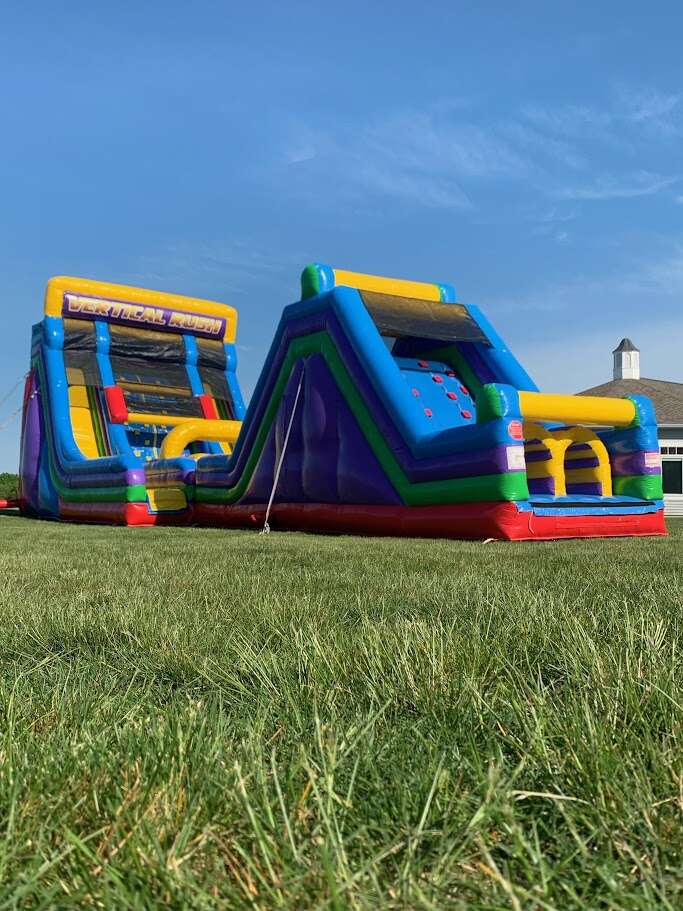
Busy Bee Jumpers’ Rock Climb and Slide could be ideal for events emphasizing climbing and sliding, with a 16-foot climbing wall leading into a double slide. For events where the obstacle course should feel more like a centerpiece, the Vertical Rush lineup adds a larger climb-and-slide experience with combo units that can extend the course farther.
Here’s a quick snapshot of common events:
|
Event Type |
Core Inflatable Choice |
Easy Planning Approach |
|
Backyard birthday |
Medium obstacle course, bounce house, or water slides in warm weather |
Match the course to your available space |
|
School field day |
Long or dual-lane inflatable slides with obstacles or water slides |
Focus on crowd flow and activity rotation |
|
Church/community day |
Medium or longer obstacle course |
Consider the full age range of the group |
|
Town/corporate event |
Large or dual-lane obstacle |
Focus the budget on flow and event fit |
Use the table as a starting point, not a hard rule.
Guest count, age range, available space, and the specific obstacle course layout still matter. If two options seem close, the better choice is usually the one that fits the event comfortably without adding size or features you’re unlikely to use.
Check the Setup Space Before You Decide
When you’re checking fit, think like you’re sketching a simple map:
- Measure usable length and width on level ground
- Check the listed dimensions and required clearance for the specific inflatable
- Check for low branches, balconies, or wires in outdoor setups
- Note slopes, patios, and any tight gates or turns
- Confirm where power will come from
- Think about how the delivery crew will access the setup area
Bring those notes to your rental company so they can point you to specific models that truly fit and flag anything that would be unsafe or too tight.
When Is an Obstacle Course Actually Better Than a Bounce House?
An inflatable obstacle course is better than a bounce house when you want more structured activity, friendly competition, and a clear start-to-finish flow. If you’re planning a school event, church fair, town day, or company picnic, that format can work especially well when guests are moving between multiple activities.
Choose obstacle courses when you:
- Expect older kids or teens who want to race and compete
- Have a larger crowd and want a more structured attraction
- Are planning a field day, fair, town event, or company picnic with set activity stations
In those settings, an inflatable obstacle course gives guests a clear path from entrance to exit and naturally creates shorter turns than the open-ended play you get with a bounce house. That can make it easier to organize activity and keep people moving.
Stick with a regular bounce house or basic combo bouncer when you:
- Know that most guests are younger children
- Want a softer, free-play area instead of timed races
- Have very limited space and need a simpler setup
A traditional bounce house is still a strong choice when open-ended jumping and play are a better fit for the group, or you simply want both options. Neither option is automatically better. The right choice depends on your guests, space, event style, and the specific inflatable.
Whatever you choose, always follow your rental company’s safety standards, which include rules on maximum users, age or size grouping, anchoring, supervision, and weather conditions.